Can Potting Soil Be Used Again
When it's fourth dimension to transplant or repot your plants, you may wonder if it's okay to reuse potting soil. Potting soil tin can be expensive – practice you take to throw your used potting soil away? Or tin you safely reuse potting soil?
Discover this guide to reusing your potting soil safely, tips for how to recharge potting soil, and means to reuse potting soil.
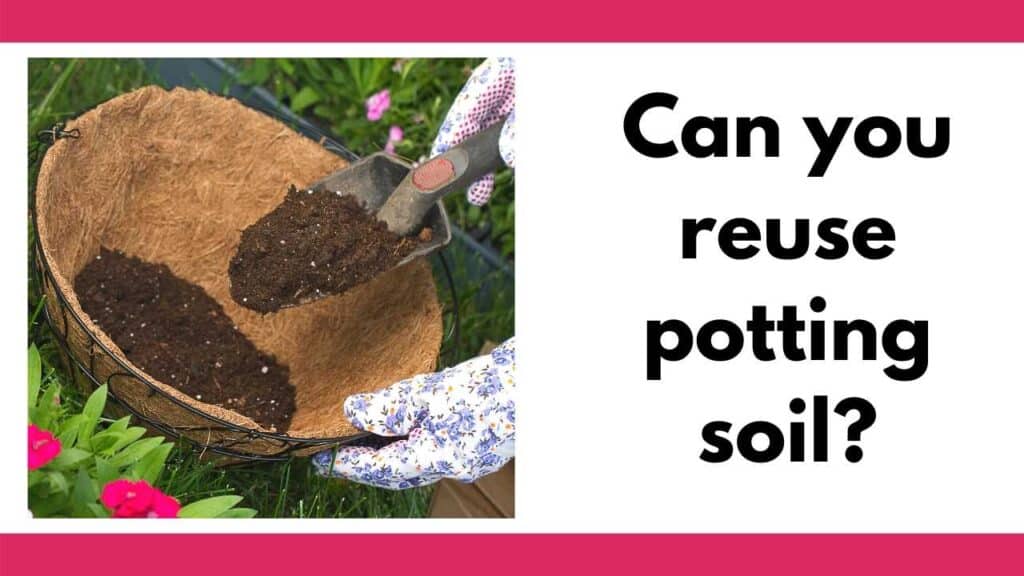
Is it okay to reuse potting soil?
This mail includes affiliate links, which means I may earn a commission on purchases made at no additional cost to you.
Yes, information technology's okay to reuse potting soil...as long as you are conscientious and take steps to correctly shop your potting soil and furnish it for side by side season. If this sounds like a lot of work, check out the department beneath on ways to reuse old potting soil that don't require rejuvenation.
There are iii principal concerns when reusing potting soil:
- Depleted nutrients
- Compacted, compressed soil
- Potential for disease
Depleted potting soil
Plants pull nutrients from the soil as they grow. Plants use varying amounts of nutrients and are frequently referred to as either "heavy feeders" or "low-cal feeders." (There are also medium feeders that fall somewhere in between.)
As the name implies, heavy feeders pull more than nutrients from the soil than light feeders. There are also soil building plants like peas, soybeans, and clover.
Heavy feeders include popular vegetables like tomatoes, spinach, peppers, and zucchini. If you've grown these popular container vegetables, your potting soil is probably depleted. Light feeders include most herbs, carrots, kale, and radish.
It's best to exercise soil rotation and plant heavy feeders in fresh soil, medium feeders in soil the side by side year, and, finally, calorie-free feeders. Store potting soil from heavy feeders and tomatoes in separate, labeled containers when you lot pack it up for the winter.
If you want to reuse potting soil, information technology'southward important to replenish it with nutrients. Please run across the section below for more than information on how to recharge your potting soil.
Compacted potting soil
Is the soil level in your pots several inches lower at the end of the flavour?
Potting soil frequently becomes compacted instead of light and airy. This is partially due to the rapid decomposition of peat moss, a common component of most potting soils in the United States. Pino bark, another common potting mix component, too decomposes quickly.
When potting soil becomes compacted, plants cannot develop healthy roots and h2o may pool on top and drain poorly. This is because compacted soil lacks pore infinite. Pore infinite makes up about 50% of healthy soil. It allows water and air to motion around your plants' roots and allows roots go from freely.
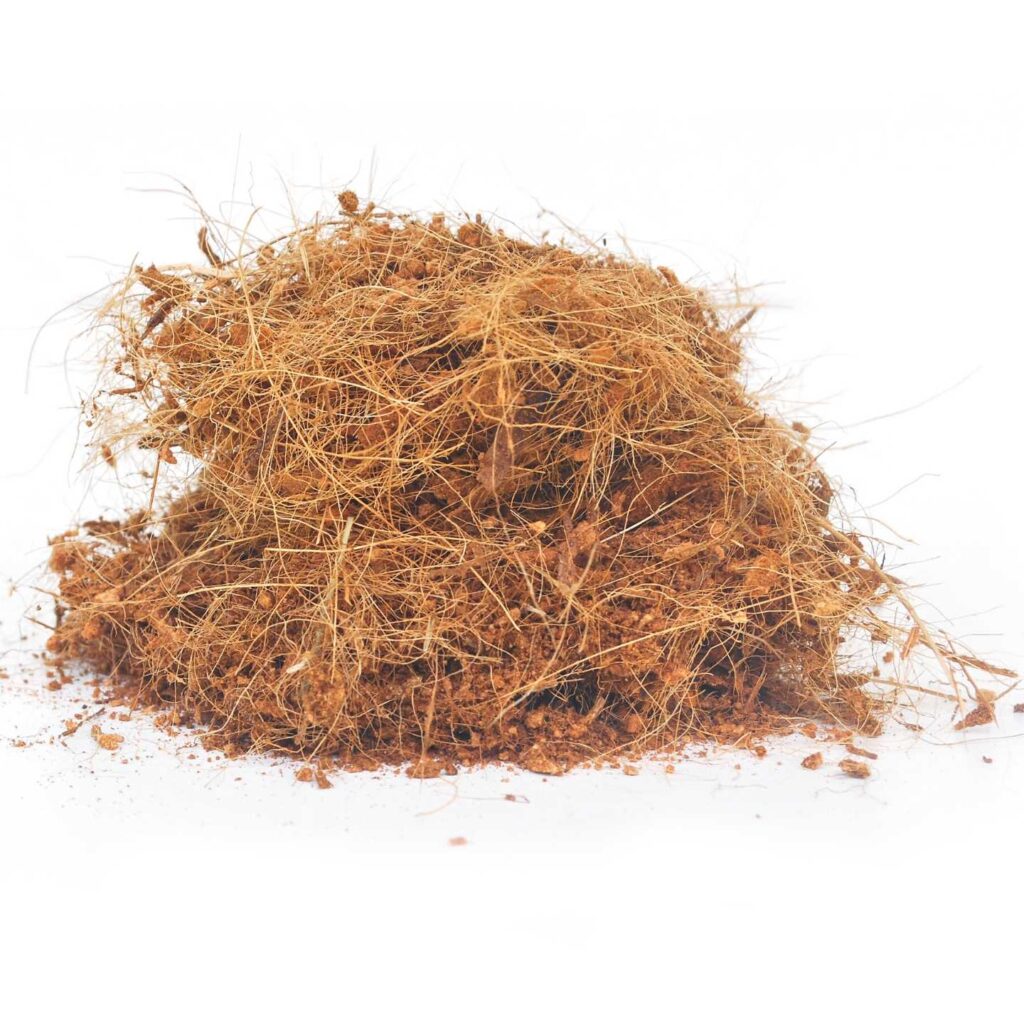
You tin, and should, manually fluff up utilize potting soil. If the peat moss is degraded, this won't exist enough to restore your soil. Adding coconut coir (which is what I recommend instead of peat moss) volition meliorate your soil's structure and water rendition abilities.
Diseased potting soil
If your plants suffered from disease, it is important to dispose of your potting soil and not attempt to reuse it.
There are a broad variety of institute pathogens and many of them can survive in soil for several years. This is 1 reason information technology is of import to practice crop rotation.
Tomatoes are prone to an incredible number of diseases and disorders. Some of these diseases tin cross over and too infect pepper plants.
The bracissa family (crops like broccoli and cabbage) are as well susceptible to diseases that can remain in the soil for years. Alternaria leaf spot, for example, tin can transmit through soil and plant debris.
Do not compost diseased soil. Instead, go rid of it completely. The 1 exception is if you have a worm compost bin. Cornell researchers constitute that vermicompost can suppress establish diseases in soil.
In that location are ways to pasteurize and solarize soil to kill nematodes, weed seeds, and other pathogens. However, solarization works best on clay and heavier soils. You can bake soil to kill most pathogens, merely this is impractical on a large calibration for most people. That is why I recommend simply tossing diseased soil.
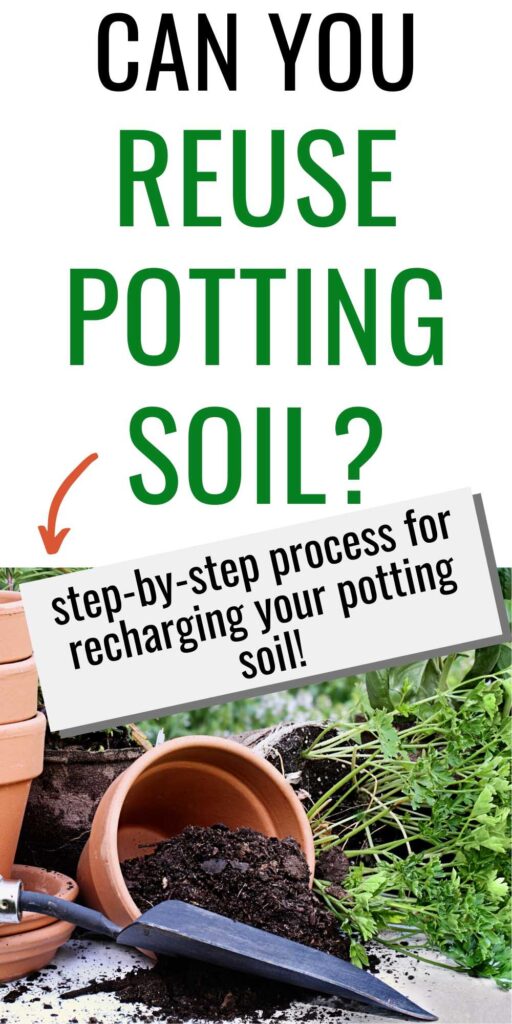
How to rejuvenate potting soil
I have a step-by-pace process to help you recharge your potting soil. Before we have a expect, it's important to understand why I recommend coconut coir instead of peat moss.
Is peat moss bad?
Peat moss is incredibly pop with gardeners and commercial growers in the Us.
Peat moss is sphagnum moss that has been compressed, submerged nether water for many years, and partially decomposed. It forms at a rate of one inch every 15-25 years, which makes information technology seem like a handy renewable resource.
Unfortunately, peat moss degrades quickly. In just i or two years, it decomposes and your potting looses looses its lite airiness and becomes compact and challenging for plants to abound in.
In order to harvest peat moss, new moss must be scraped abroad from the bog's surface. Mining peat moss disrupts the bog'southward ecosystem and has the potential to disrupt history, too. Peat bogs have a depression-oxygen surround that's perfect for preserving artifacts and mummies. (Read more almost peat bogs in the Smithsonian Mag.)
Peat bogs store about a third of the world's soil carbon. Amazingly, peatlands shop 100x more than carbon that tropical forests! Harvesting peat moss releases carbon dioxide. These emissions are magnified if the harvested peatlands grab fire. Co-ordinate to the United nations, peatland fires account for 5% of global anthropogenic carbon immersions.
Instead of adding peat moss, or purchasing new potting soil that uses peat moss, use kokosnoot coir to rejuvenate your potting soil.
Kokosnoot coir is a renewable product and it last longer than peat moss in your potting soil. Coconut coir is a byproduct of the coconut industry and is comprised of coconut husk grit and brusque fibers. Approximately 12 million pounds are produced a twelvemonth.
Coconut coir is a more sustainable option than peat moss and it concluding longer, which means yous'll have less work to do adjacent year when you recharge your potting soil.
Nosotros'll discuss how to to use coconut coir to restore your potting soil in the steps below.
Stride past step guide to rejuvenating potting soil
This procedure needs to be done at least 2 weeks prior to planting flavour.
Ideally you should sift through your soil and remove debris before storing it for the wintertime, but if you didn't do that already practice it before washing your soil and making pH adjustments. I've included removing droppings from the soil as the beginning step, simply yous tin skip to stride #2 if you've already removed all the debris from your old potting soil.
Materials needed for soil rejuvenation
- A big tarp or piece of plastic sheet
- A soil sieve – optional merely recommended
- A rake or manus cultivator
- A large saucepan or bin with holes in the bottom
- Slow release fertilizer
- Coconut coir
- Perlite – optional (makes the soil lighter)
- Soil pH tester – optional but recommended
- Gypsum, lime, or other soil amendments as needed to adjust soil pH
- Compost and worm castings, optional but helpful
- A large compost bin or container for holding your soil
- Gloves and mask – optional but recommended. Discover the best cut resistant garden gloves here.
How to rejuvenate your potting soil
Whenever you're working with soil and soil amendments, it's a good thought to wear gloves and a protective mask.
i. Spread your soil out on your tarp or plastic canvas. Remove and dispose of any old roots, plant stems, or other droppings. You tin rake through it with a full sized rake or a hand fork. I personally adopt a hand cultivator and a garden kneeler or knee pads.
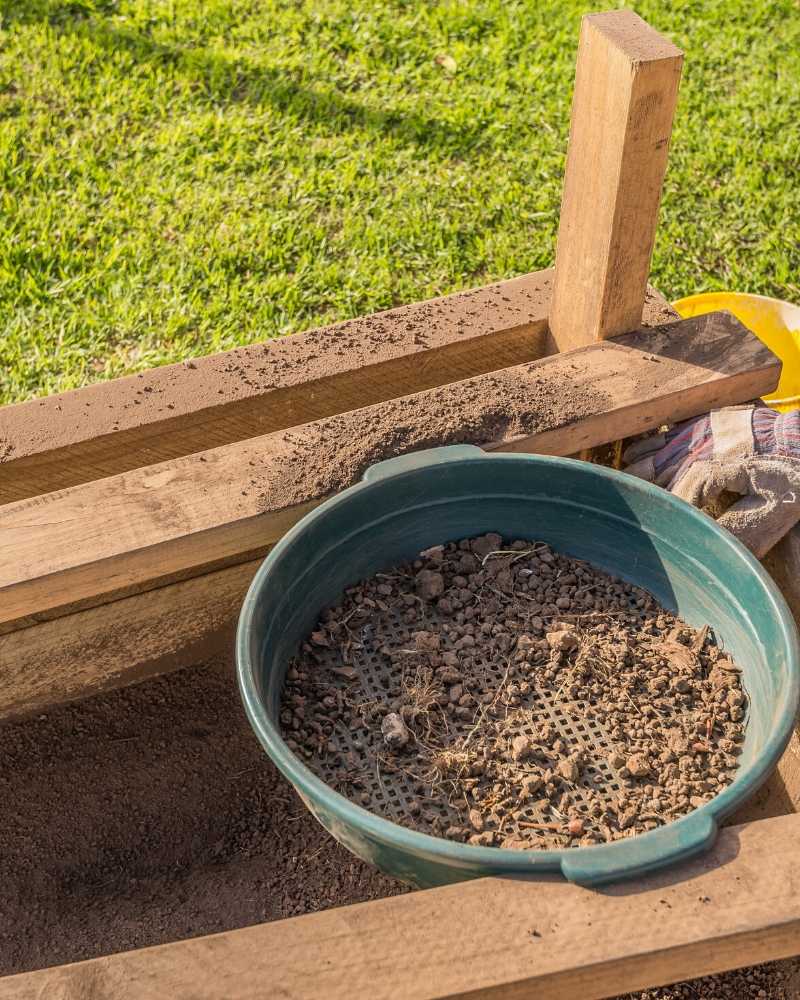
You may also desire to sieve your soil, if you accept a garden sifter or sieve set up. This is best, simply many first or small calibration gardeners do not take a garden sieve. If you'er on a budget and don't have one, that's okay. Simply rake the soil by paw equally best yous can.
2. Side by side yous're going to flush the salts from your soil. A lot of people don't do this because they don't realize how important it is. Mineral table salt build up in soil, peculiarly if you don't wanter potted plants until water runs freely out of the lesser. Brown leaf tips, yellowing leaves, wilting, and poor growth are all signs of possible excess mineral table salt aggregating in your potting soil. If you lot've encountered these problems before, now is the time to start washing your soil!
Transfer the soil to a big bin or saucepan with holes in the bottom. You tin use a drill to drill out holes in whatsoever large plastic container.
Make full the container with h2o and saturate the soil until h2o flows freely out of the bottom. Let the soil to drain fully, then flush information technology a second time. After the water has drained out over again, transfer your soil back to your tarp or plastic sail.
After the soil has dried, break up any clumps with your rake and affluent information technology a 2nd fourth dimension.
iv. Add compost and worm castings, if using. Sieve your compost if you have a sieve. Mixing a 1:i ratio of compost to soil will requite you squeamish, rich potting soil to grow in. Worm castings are typically used at near 10-12 ounces per 5 gallons of soil.
3. Add soaked coconut coir and/or perlite. You lot tin utilise upwardly to 40% kokosnoot coir and 10-20% perlite. For best results, use warm water and a very large container when you soak your kokosnoot coir.
5. Test and suit soil pH. Many people don't bother with this extra step, but it is worthwhile. Different plants adopt different acidities, but many vegetables do best with slightly acidic soil with a pH of 5.8-vi.5. Many vegetable gardeners aim for a pH of vi.5. If your soil pH is below 5.5 or higher up vii.5, you volition want to adapt it to make sure you plants tin can access nutrients in the oil.
You don't have to do whatever complicated science experiments to test your soil pH. Get an electronic pH soil tester and it volition do the testing for you lot!
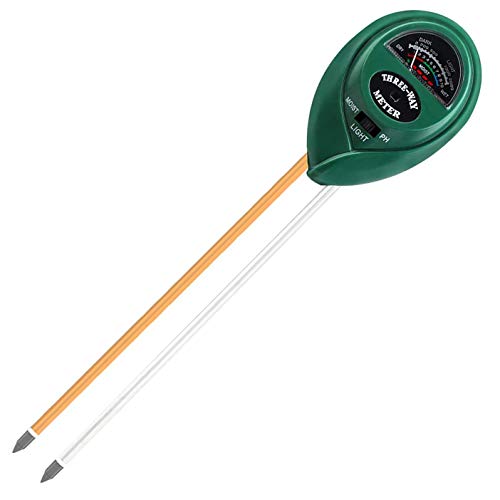
Potting soil frequently becomes more acidic over time. Lyme and wood ash are two popular soil amendments to heighten soil pH. In that location are different forms of lyme and awarding rates vary, so brand sure to read up on how to make your soil less acidic if that's something you need to practise. For acid-loving plants like blueberries, you lot may demand to brand your soil more acidic with aluminum sulfate or sulfur.
6. Add together i teaspoon of slow release fertilizer per gallon of soil. Non certain how much soil you take? Check the size of your bucket or bin to encounter how many gallons it contains.
7. Add together enough water to *lightly* moisten the soil and store it in a large bin or compost container for at least 2 weeks to allow everything to incorporate into the soil.
Enjoy your awesome rejuvenated potting soil!
Ways to reuse old potting soil
If storing and recharging soil seems like a hassle, here are a few ideas for ways to reuse your former potting soil:
- Use it to fill up in holes in your yard. This is my personal favorite and something I accept washed many times. Fill it ruts, wash outs, dog holes, spots where your toddler has been excavation, etc.
- Add it to your compost pile. Make sure to to avoid adding plants and dirt from whatever plants that suffered from disease. Many pant pathogens tin remain in soil for years, even if you have a hot compost pile. New to composting? Learn more than from an authoritative, free source like an agricultural extension. For specific advice, find and contact your local state extension office.
- Bury information technology in a compost hole.
- Work it into your flower beds.
- Utilise it to make full the lesser half of raised beds, so add together fresh soil to fill up. (Practice Non practise this with diseased soil!)
Frequently asked questions
Q: Can I reuse potting soil from tomatoes?
A: Practise not reuse potting soil from tomatoes to grow tomatoes again for at least 3 years. They are heavy feeders that pull lots of nutrients from the soil. Additionally, tomatoes are disease prone. These diseases can stay in the soil for several years. Some of them also touch pepper plants, so don't reuse lycopersicon esculentum soil for peppers, either.
B: What can I do with old tomato soil?
A: You can recharge tomato soil and use it for a different family of plants. Soil replenishing plants like beans and peas work well, as practice light feeders similar about herbs, radishes, and kale.
Q: Tin you put erstwhile soil in the compost bin?
A: Yes, as long every bit the plants in it weren't diseased. Practise non put diseased soil in your compost pile.
I hope this guide to reusing potting soil helps you! Happy Gardening.

Natasha Garcia-Lopez is an avoid home-gardener and proud owner of 88 acres of land in rural West Virginia. She was a member of the Association for Living History Farms and Agricultural Museums for many years and is currently enrolled in the Oregon State University Primary Gardner Brusk Course program so she tin ameliorate help you lot with your gardening questions.She holds a certificate in natural skincare from the School of Natural Skincare.
Source: https://togethertimefamily.com/can-you-reuse-potting-soil/
0 Response to "Can Potting Soil Be Used Again"
Post a Comment